%201.avif)


Signs That Flat Feet Are Causing Other Problems in Your Body
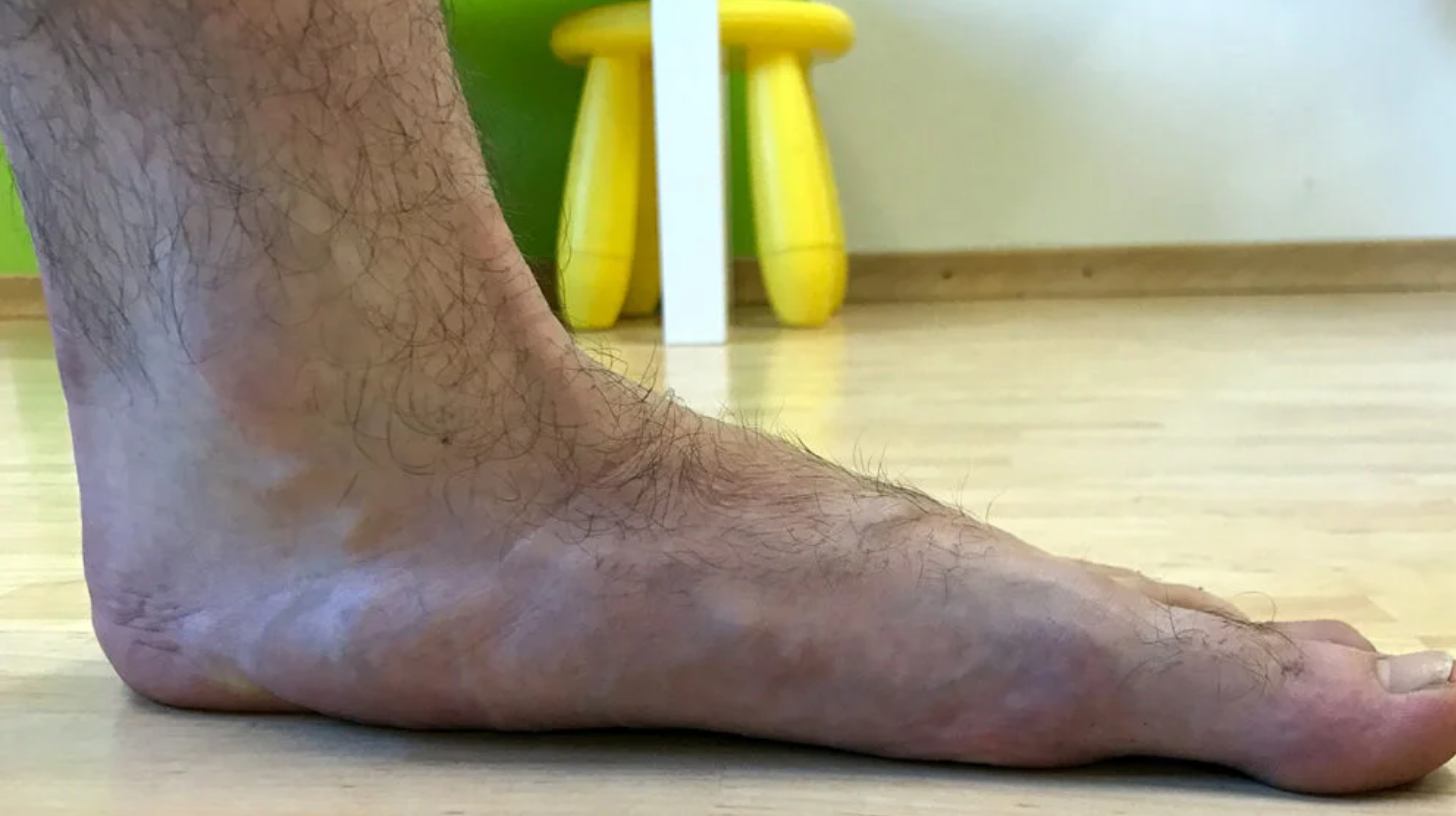
You can tell flat feet are causing problems elsewhere in your body when you notice pain on the inside of your knees, tightness in your hips, a persistent ache in your lower back, shin splints, or shoes that wear down unevenly on the inner edge. Another strong clue is pain that eases when you rest your feet or wear supportive shoes, then returns when you go back to flat, unsupportive footwear.
Your feet are the foundation of your body. When the arch collapses, the foot rolls inward with every step, and that inward roll travels up through your shin, knee, hip, and spine. Each joint above has to compensate. Over thousands of steps a day, those small adjustments add up to real strain in places that have nothing to do with your feet.
At Northern Ankle Foot Associates, we evaluate flat feet as part of a full lower-body assessment, not just a foot exam. Many of our patients arrive with knee or back complaints and no idea their arches are involved. In this article, we will cover the specific signs to watch for, how the chain reaction works, when flat feet become a real problem, and what can be done about it.
How Flat Feet Affect the Rest of Your Body
The Chain Reaction Explained
Your body works as a linked system. Movement starts at the foot, passes through the ankle and knee, continues into the hip, and reaches the spine. When each link works properly, force spreads out evenly. When one link is off, everything above compensates.
Here is what happens with flat feet, step by step:
- The arch collapses under your body weight, and the foot rolls inward. This is called overpronation.
- The ankle tilts inward, which forces the shin bone to rotate inward.
- That rotation travels up to the knee. The knee is a hinge built to move forward and back, not to twist, so the twisting motion strains it.
- The thigh bone rotates inward too, shifting the hip joint out of its normal path.
- The pelvis tilts forward, and the lower back increases its curve to keep you upright.
Think of a building with an uneven foundation. The cracks do not show up in the basement. They show up in the walls upstairs. Feet work the same way.
Not Everyone With Flat Feet Has Problems
This is worth saying clearly. Plenty of people have flat feet and never experience any pain at all. Flat feet by themselves are a foot type, not automatically a medical problem. The concern is when the collapsed arch starts producing symptoms, either in the foot or somewhere up the chain. That is the difference between having flat feet and having flat feet that need treatment.
Signs in Your Knees
Pain on the Inside of the Knee
This is the single most common sign we see. When overpronation rotates the shin inward, the knee is pushed into a slightly knock-kneed position. That shifts extra load onto the inner side of the joint.
Patients describe it as an ache on the inner knee that shows up after walking, standing for long stretches, or climbing stairs. Research has linked flatter foot posture to a higher likelihood of inner knee cartilage damage and recurring knee pain, which makes sense given where the load ends up.
Pain Around or Under the Kneecap
Overpronation can also throw off how the kneecap tracks in its groove. Instead of gliding straight, it pulls slightly to one side. The result is a dull ache around or behind the kneecap that flares with stairs, squatting, or sitting for long periods with bent knees.
Knee Pain That Improves With Better Shoes
Here is a useful self-check. If your knee pain noticeably improves when you wear supportive athletic shoes and gets worse in flat sandals or worn-out sneakers, your feet are very likely part of the equation. Knee pain from a purely internal knee problem does not usually respond that way to footwear changes.
Signs in Your Hips
Tightness and Aching in the Outer Hip
When the thigh bone rotates inward, the muscles that stabilize your hip have to work harder to hold you steady. Over time those muscles fatigue and tighten. Patients often describe a deep ache or tightness on the outside of the hip, sometimes with a burning quality after long walks.
Uneven Hip Height or a Feeling of Being Off Balance
If one arch collapses more than the other, one leg effectively becomes slightly shorter through the foot. That can tilt your pelvis and leave you feeling uneven when you stand or walk. Some people notice their pants hang differently on one side, or that they always shift their weight to one leg while standing.
Signs in Your Lower Back
A Persistent Low Back Ache That Worsens With Standing
When the pelvis tilts forward to compensate for collapsed arches, the lower back increases its curve. Those muscles then stay under constant tension. The classic pattern is low back tightness that builds through the day, feels worse after prolonged standing or walking on hard floors, and improves when you sit or lie down.
Back Pain That Does Not Respond to Back Treatment
This is a telling sign. If you have tried stretching, massage, and back-focused therapy with only temporary relief, the source may be lower than your back. Treating the symptom at the spine while the foundation stays unstable rarely produces lasting results.
Signs in Your Lower Legs and Ankles
Shin Splints
Pain along the inner edge of the shin bone is one of the most common overpronation-related complaints, especially in runners and people who spend long hours on their feet. The muscles that try to control the collapsing arch attach along the shin, and they get overworked.
Achilles Tightness and Tenderness
Overpronation changes the angle the Achilles tendon pulls at, which can leave it tight and sore near the back of the heel. Chronic tightness here also feeds back into foot problems, creating a loop.
Ankle Rolling and Instability
A foot that already sits in a rolled-inward position has less margin for error on uneven ground. Some patients notice they roll their ankles more easily than other people. Repeated episodes can lead to lasting looseness in the joint, which we cover in our work on chronic ankle instability.
Signs in Your Feet
Heel Pain and Arch Pain
When the arch collapses, the plantar fascia along the bottom of the foot gets stretched with every step. This is a leading contributor to plantar fasciitis and other forms of heel pain. If your heel hurts most with your first steps in the morning and your arches are low, the two are almost certainly connected.
Bunions and Toe Deformities
Overpronation shifts weight onto the inner side of the forefoot and the big toe joint. That repeated pressure is a well-recognized factor in the development of bunions and hammertoes. Patients are often surprised to learn their bunion and their flat feet are part of the same mechanical story.
Aching, Tired Feet at the End of the Day
Feet that lack arch support work harder to stay stable. Generalized fatigue and aching after a normal day, without any specific injury, is a common early sign that your arches are not doing their job.
The Signs at a Glance
The Shoe Wear Test
One of the simplest checks you can do at home costs nothing. Set your most-worn pair of shoes on a table and look at them from behind. If the soles are worn down noticeably more on the inner edge, or if the shoes lean inward rather than sitting upright, that is physical evidence of overpronation. We ask patients to bring in their shoes for exactly this reason.
When Flat Feet Become a Real Problem
Warning Signs Worth Acting On
Flat feet deserve a professional evaluation when you notice any of the following:
- Pain in the foot, ankle, knee, hip, or back that keeps returning
- One arch that has visibly flattened compared to the other
- An arch that has collapsed recently in adulthood, rather than always being low
- Difficulty standing on your toes or rising onto the ball of one foot
- Stiffness in the foot, or an arch that no longer forms even when you are seated
- Swelling along the inside of the ankle
- Increasing difficulty finding shoes that feel comfortable
Adult-Onset Flat Feet Deserve Extra Attention
There is an important difference between flat feet you have had since childhood and an arch that collapses later in life. Adult-acquired flatfoot usually points to a specific problem, most often gradual failure of the tendon that supports the arch on the inside of the ankle. This condition progresses through stages, and the earlier it is caught, the more treatment options remain available.
Warning signs include pain and swelling along the inside of the ankle, an arch that is getting flatter over months or years, and trouble doing a single-leg heel raise. If your arch used to be there and now it is not, that is a reason to be seen promptly rather than waiting.
How a Foot and Ankle Specialist Evaluates the Whole Chain
More Than a Foot Exam
When a patient comes in with knee, hip, or back complaints alongside flat feet, we assess the entire lower body. We watch how you walk, looking at heel strike, arch behavior under load, knee tracking, and hip motion. We test the flexibility of your arch, your ankle range of motion, and the strength of the muscles that support the arch. We examine your shoe wear patterns. When needed, we use imaging to assess bone alignment.
Dr. Robyn Joseph and our team approach these cases this way because the foot never works alone. A biomechanics-driven evaluation is what connects a knee complaint to its actual source, and it is the difference between chasing symptoms and correcting the cause.
Knowing When to Involve Others
Not every knee or back problem comes from the feet. Part of a proper assessment is determining how much of your symptom picture is mechanical and coming from below, and how much is not. When something falls outside our focus, we say so and coordinate with the right specialist. That honesty matters more than claiming every problem starts at the foot.
Treatment Aimed at the Foundation
Once we understand your mechanics, treatment usually starts conservatively:
- Custom orthotics built from a mold of your foot, which support the arch in the specific way your foot needs. This is the core treatment for symptomatic flat feet and often the piece that resolves knee and back complaints.
- Targeted strengthening for the muscles that support the arch and control rotation at the hip.
- Calf and Achilles stretching, since tightness there worsens overpronation.
- Footwear guidance, including which shoe features actually matter for your foot type.
- Bracing for more advanced cases where additional stability is needed.
- Surgical reconstruction, reserved for severe or advanced deformity that has not responded to conservative care.
Store-bought insoles help some people with mild symptoms, but they are made for an average foot. When symptoms have already traveled up to your knees, hips, or back, the precision of a custom device usually matters.
Frequently Asked Questions
Can Flat Feet Cause Problems Later in Life?
Yes. Many people with flat feet are symptom-free for decades and then begin having trouble in their forties, fifties, or later. Two things change over time. Tissues lose some elasticity, and the tendon that supports the arch can gradually weaken, allowing the arch to flatten further. Years of altered mechanics also accumulate in the knees, hips, and back. Flat feet that never bothered you before can absolutely start causing problems later.
Can Flat Feet Affect the Whole Body?
Yes. Because the foot is the base of your posture and movement, collapsed arches can influence the ankles, shins, knees, hips, pelvis, and lower back. The effect works upward through connected joints, with each level compensating for the one below. This is why someone can have low back tightness or inner knee pain with no memory of injuring either area, while the actual source sits at the arch.
What Is Stage 4 Flatfoot?
Stage 4 refers to the most advanced stage of adult-acquired flatfoot. In the earlier stages, the problem is limited to the foot: the supporting tendon becomes inflamed, then the arch flattens, then the deformity becomes rigid. By stage 4, the collapse has progressed far enough that the ankle joint itself has tilted and the ligaments on the inside of the ankle have given way. Treatment at this stage is complex and often surgical, which is the strongest argument for having a flattening arch evaluated early.
When Should I Worry About Flat Feet?
Worry less about the shape of your arch and more about symptoms. See a specialist if you have recurring pain anywhere from your feet to your lower back, if one arch is flatter than the other, if your arch has collapsed in adulthood, if you have pain or swelling on the inside of your ankle, or if you cannot comfortably rise onto the ball of one foot. Painless flat feet with no functional limits usually need monitoring rather than treatment.
What Muscles Are Affected by Flat Feet?
Several groups take on extra work. The tibialis posterior on the inside of the ankle is the main arch supporter and the one most commonly overloaded. The small muscles within the foot itself fatigue from constant stabilizing. The calf muscles and Achilles tend to tighten. Further up, the tibialis anterior along the shin gets overworked, and the hip stabilizers strain to control the inward rotation of the thigh.
What Should I Avoid if I Have Flat Feet?
Avoid completely flat, unsupportive footwear worn for long stretches, including thin flip-flops, ballet flats, and worn-out sneakers. Avoid walking barefoot on hard floors for extended periods. Avoid large sudden jumps in high-impact activity without building up gradually. And avoid ignoring pain that keeps coming back, since the compensations that develop around persistent pain often create their own problems.
Can You Reverse Flat Feet?
In adults, the structure of a flat foot generally cannot be reversed without surgery, because the bones and ligaments have settled into that position. What can change, often substantially, is your symptoms. Proper support, strengthening, and footwear changes routinely eliminate the pain and the downstream effects on the knees, hips, and back even though the arch shape stays the same. In children, arches often develop on their own, which is why flat feet in children are usually managed differently than in adults.
Final Thoughts
The clearest signs that flat feet are affecting the rest of your body are pain on the inside of your knees, tightness in your hips, low back ache that builds with standing, shin splints, and shoes worn unevenly on the inner edge. The strongest clue of all is pain that responds to footwear and rest, because that points to a mechanical cause rather than a problem inside the joint itself.
Flat feet on their own are not a disease, and many people live with them comfortably for life. But when the arch stops doing its job, the joints above pick up the slack, and they were not built for it. Treating the foundation is what breaks that pattern, and it is often simpler than people expect once the source is correctly identified.
Our team at Northern Ankle Foot Associates specializes in flat feet and overpronation, including the knee, hip, and back complaints that come with them. We assess your gait, your alignment, and your whole lower body, then build a plan that addresses the cause rather than chasing each symptom separately.
Call us at (516) 365-4545 or visit our Manhasset, NY office to schedule an appointment. If your knees or back have been bothering you and nothing has helped, your feet are worth a closer look.
Why Choose Northern Ankle Foot Associates

Evaluation Before Treatment
.avif)
Specialist-Led Care
.avif)
Conservative Care First
.avif)
Clear Treatment Path
.avif)
Continuity of Care
.avif)
Long-Term Stability Focus
%201.png)
.avif)
Flexible Financing Options Are Available
%201%20(1).png)
Insights on Foot & Ankle Health

Latest Techniques in Bunion Surgery
.avif)
Orthotics Use and Maintenance | Care Tips for Long-Term Support
Request An Appointment
Get expert foot and ankle care tailored to your needs. Schedule your appointment today.

Areas We Serve
Get expert foot and ankle care tailored to your needs. Schedule your appointment today.
.avif)
%201%20(1).png)


%201.avif)