%201.avif)


Signs of a Hairline Fracture in Your Ankle
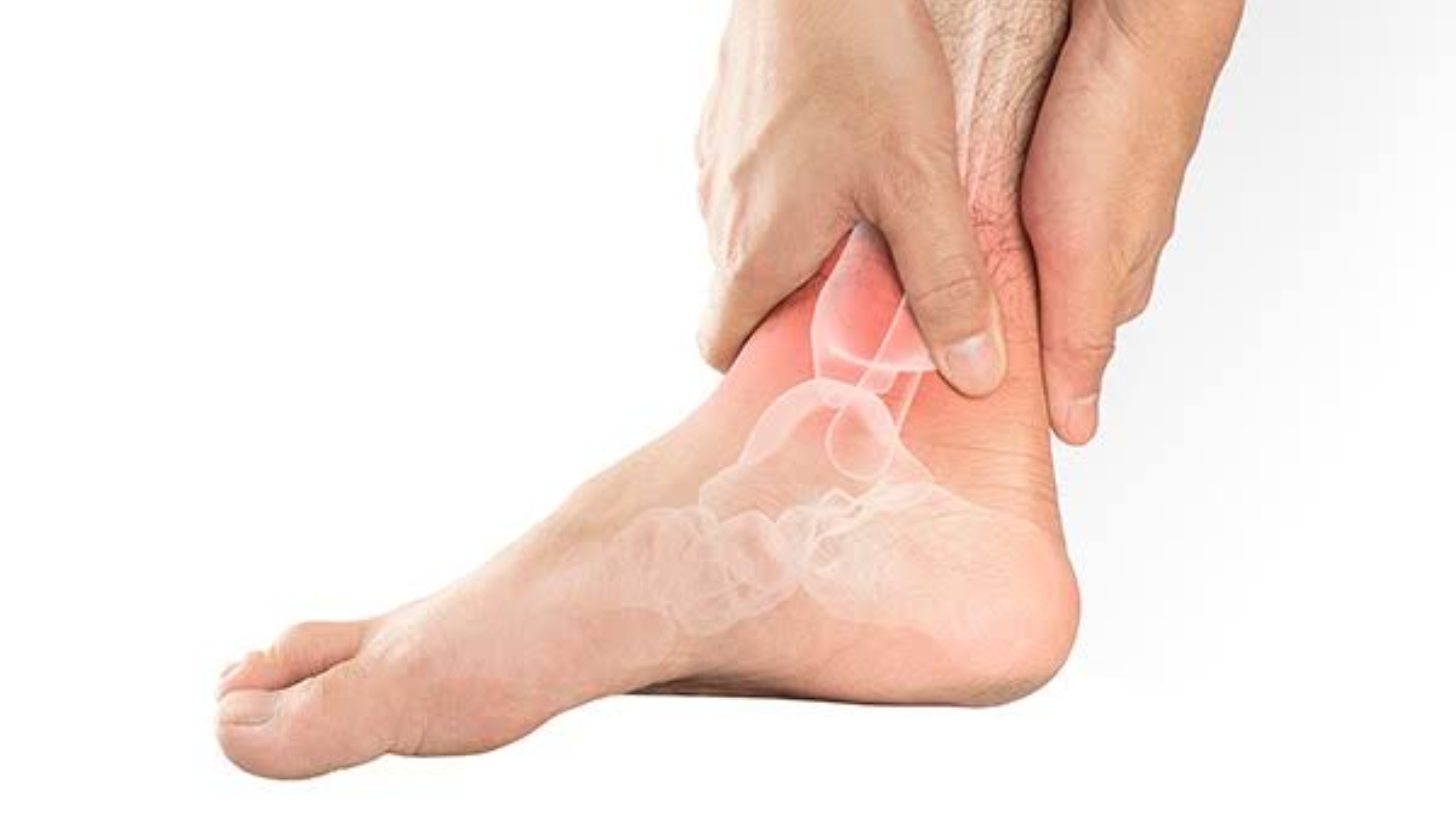
A hairline fracture in your ankle usually shows up as a deep, aching pain right over the bone that gets worse when you put weight on it and does not steadily improve the way a sprain does. You will often feel sharp tenderness when you press directly on one specific spot on the ankle bone, along with swelling that builds gradually and pain that lingers past the first few days instead of easing off. The tricky part is that a hairline fracture can feel surprisingly mild, which is exactly why so many get mistaken for a sprain.
A hairline fracture, also called a stress fracture or a stable fracture, is a small crack in the bone that has not shifted out of place. Because the bone is not fully broken and nothing looks deformed, the injury can seem minor. Some people walk on a hairline ankle fracture for days or even weeks, assuming it is just a bad sprain, until the pain refuses to go away.
At Northern Ankle Foot Associates, telling a subtle fracture apart from a sprain is something we do constantly, and it is one of the most important calls to get right. A missed hairline fracture that keeps getting loaded can widen into a complete break. In this article, we will cover the specific signs of a hairline ankle fracture, how it differs from a sprain, why it is so easy to miss, and when you need imaging rather than a wait-and-see approach.
What a Hairline Fracture in the Ankle Actually Is
A Crack, Not a Complete Break
Picture bending a green twig. Before it snaps in two, it develops small cracks along the surface. A hairline fracture is that early crack stage in bone. The bone is damaged but still holds together, and the pieces have not separated or shifted.
This is different from the dramatic breaks people usually imagine. There is often no visible deformity, no bone poking out, and sometimes not even severe pain. That lack of obvious signs is precisely what makes hairline fractures so easy to underestimate.
Two Ways They Happen
Hairline fractures in the ankle occur through two main routes. The first is a single twist, roll, or awkward landing that cracks the bone without displacing it, the same kind of event that causes sprains, which is a big reason the two get confused. The second is repetitive stress over time, where running, jumping, marching, or a sudden jump in activity gradually creates a small crack. This second type is what most people mean by a stress fracture, and it builds so slowly that there is no single injury moment to point to.
Which Bones Are Involved
The ankle is built from three bones: the tibia (shinbone), the fibula (the thinner bone on the outer side), and the talus (which sits between the heel and the leg bones). Hairline fractures most often involve the lower ends of the tibia and fibula, particularly the bony knobs on either side of your ankle called the malleoli. A crack in one of these can feel almost identical to a sprained ligament in the same area.
The Key Signs of a Hairline Ankle Fracture
Pinpoint Pain Directly Over the Bone
This is the most useful sign. Run a finger along the bony bumps on the inside and outside of your ankle. With a hairline fracture, pressing on one specific point on the bone produces sharp, localized pain. A sprain, by contrast, tends to hurt over a broader area of soft tissue, usually just below or in front of the ankle knob rather than right on it.
The Ottawa Ankle Rules, a widely used clinical guideline, are built partly around this idea. Bony tenderness at specific points on the ankle is one of the main reasons to order an X-ray.
Pain That Worsens With Weight and Eases With Rest
A hallmark of a bone injury is that the pain tracks closely with load. It flares when you stand or walk, especially during the push-off part of a step, and it settles when you get off it. If your ankle feels okay resting but a specific spot lights up the moment you bear weight, that pattern points more toward bone than ligament.
Swelling That Builds Gradually
Hairline fractures usually swell, but often not dramatically and not instantly. The swelling tends to appear over hours and stays fairly localized around the injured bone. A severe sprain, interestingly, can swell more and faster than a hairline fracture, which is one reason people wrongly assume the more swollen injury must be the more serious one.
Bruising That Shows Up Later
Bruising may appear a day or two after the injury, sometimes tracking down toward the foot. It is not always present with a hairline fracture, so its absence does not rule one out.
Pain That Lingers Past a Few Days
This is often the sign that finally sends people in. A mild sprain generally improves noticeably within a few days of rest, ice, and elevation. A hairline fracture does not follow that curve. If your ankle pain is no better, or is worse, 48 to 72 hours after the injury, that stalled recovery is a strong signal to get an X-ray rather than keep waiting.
Difficulty With Push-Off
You may be able to walk flat-footed with a hairline fracture, but rising onto your toes or pushing off to take a step often produces a distinct jolt of pain. That specific movement loads the ankle bones in a way that gentle flat walking does not.
Hairline Fracture vs Sprain: How to Tell Them Apart
The symptoms overlap heavily, which is why imaging is often the only way to be certain. Still, some patterns lean one way or the other:
Notice that a sprain is more likely to feel unstable or loose, since the problem is stretched ligaments, while a fracture is more likely to produce that pinpoint bony tenderness. But these are tendencies, not guarantees. We treat plenty of patients whose "obvious sprain" turned out to be a fracture and vice versa. When the two are hard to separate, that uncertainty is itself the reason to get it checked.
If you want a fuller breakdown of separating a break from a sprain, we cover it in our guide on telling a sprained ankle from a broken one.
Why Hairline Ankle Fractures Are So Easy to Miss
The Pain Can Be Deceptively Mild
The severity of a fracture does not reliably match the intensity of pain. A stable hairline crack in a spot that bears less weight may hurt less than a bad sprain. People reason that something this manageable cannot be broken, so they push through it. That assumption is exactly backward, and it is how a small crack becomes a bigger one.
They Do Not Always Show on the First X-Ray
Here is a detail that surprises many patients. Hairline fractures, especially stress fractures, frequently do not appear on an initial X-ray. The crack can be too fine to see until the bone begins healing a couple of weeks later, when new bone formation makes it visible. A "normal" X-ray shortly after injury does not always mean there is no fracture.
This is why we do not stop at one clear X-ray when the clinical picture still points to a fracture. An MRI or bone scan can detect a hairline or stress fracture long before it shows on plain film, and this is often the step that gets a correct diagnosis after weeks of a "sprain that would not heal."
They Get Filed Under "Just a Sprain"
Because sprains are far more common and share the same symptoms, the default assumption after a twisted ankle is a sprain. Most of the time that assumption is right, which is exactly why the exceptions slip through. A fracture treated as a sprain keeps getting walked on, and continued loading is the enemy of a healing bone.
What Happens if a Hairline Ankle Fracture Is Missed
The Crack Can Grow
A hairline fracture that keeps bearing weight can widen and progress into a complete, displaced fracture. That is a far more serious injury, often requiring immobilization for longer, and sometimes surgery with plates or screws to repair what began as a minor crack. This is why we treat even suspected hairline ankle fractures seriously rather than waiting to see if the pain sorts itself out.
Delayed or Failed Healing
Certain areas of the ankle and foot have limited blood supply, which means they heal slowly and are prone to problems if not protected. A fracture in one of these spots that goes untreated can fail to heal properly, a situation called nonunion, leading to persistent pain and sometimes needing surgery to fix.
Long-Term Joint Damage
A fracture that heals in a poor position, or a crack that repeatedly reopens with activity, changes how the joint lines up and moves. Over time this uneven wear can contribute to ankle arthritis, stiffness, and chronic discomfort that could have been avoided with early, correct treatment.
It Can Mask a Second Injury
A hard twist can crack a bone and tear a ligament at the same time. If everything gets labeled a sprain, the fracture is missed, and if it all gets labeled a fracture, an unstable ligament injury might be overlooked. Sorting out exactly what is damaged is part of why a proper evaluation matters.
When You Need to Get Your Ankle Checked
You should see a specialist rather than wait it out if any of these apply:
- You cannot bear weight for four steps right after the injury or in the office
- There is sharp, pinpoint tenderness directly on the ankle bone
- Pain has not improved, or has worsened, after 48 to 72 hours
- Swelling is significant or is not settling with rest, ice, and elevation
- The ankle looks misshapen, or you felt or heard a crack
- You have numbness, tingling, or the toes look pale
- The pain came on gradually with training and now hurts to walk on
That last point matters for active people. A stress-type hairline fracture rarely has a dramatic injury moment. It creeps in as activity-related ankle pain that steadily worsens. If your training-related ankle pain has been building rather than fading, treat that as a reason to be evaluated, not a reason to push through.
Extra Caution for Certain Groups
People with osteoporosis, low bone density, or a history of stress fractures are more prone to hairline fractures and may crack a bone with less force. The same is true for people with diabetes, whose reduced sensation can dull the warning pain that would normally prompt a visit. If you fall into one of these groups, lower your threshold for getting an ankle injury looked at.
How a Foot and Ankle Specialist Diagnoses a Hairline Fracture
The Hands-On Exam
We start by pinpointing exactly where the pain lives. We press methodically along the ankle bones and ligaments, distinguishing bony tenderness from soft-tissue tenderness. We assess swelling, check your ability to bear weight, and test specific movements like rising onto the toes. We also look at how the injury happened, since the mechanism gives real clues.
Imaging Done Right
X-rays come first and catch most fractures that have any displacement. When the exam suggests a fracture but the X-ray looks clean, we do not simply send you home reassured. Depending on the situation, that means either advanced imaging like an MRI, which reveals hairline and stress fractures that plain films miss, or a short period of protection followed by a repeat X-ray once early healing would make a subtle crack visible.
Dr. Robyn Joseph and our team take this layered approach because the cost of missing a hairline fracture is high and the cost of confirming one is low. Our focus is specifically on the foot and ankle, and that concentration is what makes it easier to catch the subtle cracks that are simple to overlook in a quick, general exam.
Treatment Matched to the Fracture
Most hairline ankle fractures heal well with the right protection. Treatment for a cracked ankle bone typically involves offloading the ankle with a walking boot, brace, or in some cases crutches, along with rest and a gradual, guided return to activity. Stable fractures often heal in six to eight weeks. Displaced or high-risk fractures may need more, occasionally including surgery. Just as important, we look at why a stress-type fracture happened in the first place, whether that is training errors, footwear, bone health, or the mechanics of how your foot loads the ankle, so it does not simply recur.
Frequently Asked Questions
Can You Walk on a Hairline Fracture in Your Ankle?
Often, yes, and that is exactly the problem. Because the bone is only cracked and not displaced, many people can still walk, limp, or even continue light activity on a hairline ankle fracture. Being able to walk on it does not mean it is fine. Continued weight-bearing can widen the crack into a complete fracture, so if you suspect one, it is safer to stay off it and get it evaluated.
How Do I Know if It Is a Sprain or a Hairline Fracture?
The most reliable clue is where and how it hurts. A hairline fracture usually causes sharp, pinpoint pain directly on the ankle bone that worsens with weight and does not improve much over the first few days. A sprain tends to hurt over a broader soft-tissue area, often feels unstable or loose, and steadily improves with rest. Because the symptoms overlap so much, imaging is frequently the only way to be certain, which is why lingering pain warrants an X-ray.
How Long Does a Hairline Ankle Fracture Take to Heal?
Most stable hairline ankle fractures heal in about six to eight weeks with proper protection, such as a walking boot or brace and modified activity. Healing can take longer in older adults, people with diabetes, those with low bone density, or when the fracture is in an area with limited blood supply. Returning to full activity too soon is a common cause of setbacks, so a gradual, guided return matters.
Will a Hairline Fracture Show Up on an X-Ray?
Not always, at least not right away. Hairline fractures and stress fractures are often too fine to see on an initial X-ray and may only become visible a couple of weeks later once the bone starts to heal. If your exam points to a fracture but the X-ray looks normal, an MRI or bone scan can detect the crack much earlier, or a repeat X-ray after a short protective period may reveal it.
What Happens if You Leave a Hairline Ankle Fracture Untreated?
An untreated hairline fracture that keeps getting loaded can widen into a complete, displaced break that is harder to treat and may require surgery. It can also heal poorly or fail to heal, leading to lasting pain, and a fracture that heals out of alignment can contribute to ankle arthritis down the road. Early treatment keeps a minor crack minor, which is the whole point of catching it promptly.
Is a Hairline Fracture the Same as a Stress Fracture?
They are closely related and the terms overlap. Both are small cracks in the bone that has not shifted. The usual distinction is cause: a hairline fracture often results from a single event like a twist or fall, while a stress fracture develops gradually from repetitive overload, such as running or a sudden training increase. The signs, imaging, and treatment approach are broadly similar for both.
Final Thoughts
The signs of a hairline fracture in your ankle are subtle by nature: pinpoint pain right on the bone, swelling that builds gradually, pain that worsens with weight and push-off, and a recovery that stalls instead of steadily improving. The single most telling clue is direction. A sprain gets better over a few days, while a hairline fracture stays put or gets worse.
The reason this matters so much is that a hairline fracture is easy to walk off and easy to mislabel as a sprain, and both of those mistakes let a small crack grow into a real break. When an ankle injury is not behaving like a sprain should, that is your cue to have it looked at rather than to keep testing it.
Our team at Northern Ankle Foot Associates specializes in diagnosing and treating ankle fractures, including the subtle hairline and stress fractures that are simple to miss. We combine a detailed hands-on exam with the right imaging so nothing slips through, and we treat the underlying cause when the fracture came from repetitive stress.
Call us at (516) 365-4545 or visit our Manhasset, NY office to schedule an appointment. If your ankle pain is not improving the way a sprain should, do not keep walking on the question. Get an answer.
Why Choose Northern Ankle Foot Associates

Evaluation Before Treatment
.avif)
Specialist-Led Care
.avif)
Conservative Care First
.avif)
Clear Treatment Path
.avif)
Continuity of Care
.avif)
Long-Term Stability Focus
%201.png)
.avif)
Flexible Financing Options Are Available
%201%20(1).png)
Insights on Foot & Ankle Health

Latest Techniques in Bunion Surgery
.avif)
Orthotics Use and Maintenance | Care Tips for Long-Term Support
Request An Appointment
Get expert foot and ankle care tailored to your needs. Schedule your appointment today.

Areas We Serve
Get expert foot and ankle care tailored to your needs. Schedule your appointment today.
.avif)
%201%20(1).png)


%201.avif)